

Martha Ann
Martha Ann
Kirk, CCVI
Kirk, CCVI
We follow Jesus who announced, “You have heard it said, Love your neighbor, hate your enemy, but I say to you love your enemy.” Pray for your enemy, pray for those who persecute you.
When Jesus was praying in the Garden of Gethsemane and people came to kill him, and Peter pulled out a sword to cut off the ear of one of the men trying to take Jesus. Jesus said “Peter, put back your sword, those who live by the sword die by the sword.” It’s so natural to want to defend ourselves and take out a weapon, but Jesus reached out to heal the very person who was coming to harm him. Let us learn how to follow Jesus.
This is the time to reflect more on the command “You shall not kill.” We spend millions of dollars making weapons---large weapons, small weapons as if the guns were our saviors, as if the guns could transform the world for good. Our lifestyles of consumption and waste are indirectly killing thousands of people. My life, my greed, my desire for cheap goods often keeps people in economic slavery producing cheap goods.
We pray that our faith may get stronger. . . so strong that we believe, “The law of the Lord is perfect.” “You shall not kill.” The vengeance that leads our society to the death penalty is not the path to “refreshing the soul.” Community, comfort, loving relationship can lead us forward after a killing. Truth, reconciliation, and community building are needed after war, after violence, after killing. How do we build reconciliation, truth, strong communities?
Since about the fourth century, Christian theologians have developed something called “the just war theory” it was an effort to lessen violence. But at this time we are called to turn from justifying war and to explore what gospel nonviolence means.
Now let us admit greed is a main thing fueling wars. Making guns often makes profit for us. Let us start to examine that in the nineteenth century 127 million people were killed through violence. The wars to end wars didn’t work and today the violence to end violence is not working.
Let’s remember that the gospel story of Jesus going into the temple, going into a place that should have been one of prayer and peace, has much to teach us. Jesus got angry. Now our anger can reveal what we care about. Jesus cared. Our anger can give us energy to transform situations of greed, to transform bad situations into something good.
And speaking of anger, let’s remember the prophet Hosea, he compared God to a ferocious mother bear, a mother bear who wanted to protect the little cubs that she loved. Let us think of those who we love and use anger to be energy to protect and create loving societies.
Where could we begin? By admitting that we are addicted to violence as a savior and solution. We could begin by disarming our own hearts and trying to learn gospel nonviolence.
Pope Francis in the message for the Fiftieth World Day of Peace said clearly, “Violence is not the cure for our broken world. Countering violence with violence leads at best to forced migrations and enormous suffering, because vast amounts of resources are diverted to military ends and away from the everyday needs of young people, [the needs of] families experiencing hardship, [the needs of] the elderly, [and the needs of] the infirm.”
We remember that the pope said by focusing on building weapons we are taking money from the vast majority of people. The pope says to be true follows of Jesus today includes embracing his teaching about nonviolence.
For Christians nonviolence is the attitude of one who is so convinced of God’s love and power that he or she is not afraid to tackle evil with weapons of love and truth. We remember the words of the psalmist for “The law of the Lord is perfect.” We remember “you shall not kill.” And we remember that those who follow God’s law will find light and joy.
Martha Ann Kirk, CCVI
Martha Ann Kirk, CCVI
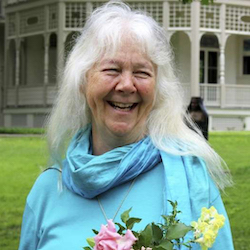
Sister Martha Ann Kirk, Th.D., a Sister of Charity of the Incarnate Word, San Antonio, Texas, is a Professor Emerita, University of the Incarnate Word, continuing to mentor in social justice, civic engagement, and compassion. She also serves as the Coordinator of Compassionate Colleges and Universities Initiative with the international Charter for Compassion. She has taught in Religious Studies, Art, Drama, and Education.
She holds a Th.D. in Theology and the Arts from the Graduate Theological Union, Berkeley, CA, and degrees from Fordham University, the University of New Mexico, and Incarnate Word College. She has had educational opportunities in 32 countries encountering God’s large family and leading tours to the Holy Land, Guatemala, Turkey, Peru, Mexico, and Ireland. She passionately believes that followers of Christ are called to embrace nonviolence. She promotes the Catholic Nonviolence Initiative.
She has received awards and recognition as a “Teacher of Peace” and one who promotes dialogue in the Holy Land. She was recognized as a San Antonio Peace Laureate. She initiated Artistic Bridges, which currently has children in six counties creating and sharing art and poetry online. She is a joyful member of Mission Concepción where they pray in dance.
She frequently writes for Global Sisters Report. She has written Women of Bible Lands: A Pilgrimage to Compassion and Wisdom; Iraqi Women of Three Generations: Challenges, Education, and Hopes for Peace; Celebrations of Biblical Women’s Stories: Tears, Milk, and Honey, a collection of dramas of biblical women with rituals, and will soon complete the story of Carla De Sola, sacred dancer and her beloved teacher.

October 17 at 7pm ET: Join Catholic Women Preach, FutureChurch, contributors to the Year C book, and co-editors Elizabeth Donnelly and Russ Petrus as we celebrate the release of the third and final volume of this ground-breaking, award winning series.
"Catholic Women Preach is one of the more inspiring collection of homilies available today. Based on the deep spirituality and insights of the various women authors, the homilies are solidly based on the scriptures and offer refreshing and engaging insights for homilists and listeners. The feminine perspective has long been absent in the preached word, and its inclusion in this work offers a long overdue and pastorally necessary resource for the liturgical life of the Church." - Catholic Media Association
Advertise with Catholic Women Preach: email Russ at russ@futurechurch.org
