

Elena
Elena
Dini
Dini
Our goal in today’s Gospel is still to reach Bethlehem. We were there on Christmas with Mary and Joseph witnessing the miracle of Incarnation, we arrived there with the shepherds who were informed by the angels that a savior has been born for us. But today we have to walk a longer way: we walk with wise men coming from the East.
Who are these wise men, these magi? We actually don’t know that much about them but we know that they are not from the people of Israel, they have not been reading Scriptures telling them that at some point a Messiah will arrive and been waiting for that for centuries… The tradition tells us that they were sort of scholars studying the stars, maybe “kings”. Everything is unexpected and surprising in this text: in the Gospel of Matthew after a long genealogy of Jesus and the conversation through dreams with Joseph, here we are with these characters not too easy to be interpreted.
The word magoi evokes the Persian priestly caste or, from what we read about the action of looking into the sky, someone devoted to astrology and magic, practices that definitely the people of Israel never looked favorably upon.
Notwithstanding, these people from a foreign land and not worshipping the God of Israel, they are the ones interpreting the signs of creation – a star -, understanding what is happening, deciding to walk a long way to pay homage to the newborn king, going to Jerusalem – where they obviously expect to find a king to be since it’s the capital - and informing the people of Israel through Herod about his birth. They are the first human beings whom we hear speaking in Matthew’s Gospel and we receive the good news of Jesus’ birth from them.
These non-Israelites receive a revelation from nature, from observing the heavens as was their tradition (religious or otherwise). The “pagan” rituals or customs serve as a tool to carry on the history of salvation and the reader who probably starts out with a negative view of these practices is forced to reconsider his/her opinion. The star brings the magi to Jerusalem, and there they are confronted with the Scriptural revelation of the people of Israel which places them in the context of the story of faithfulness of a God who loves God’s people. After the Jerusalem break, the star precedes them to the house where they find Jesus and his mother.
“They were overjoyed at seeing the star” Yes, a wonderful verb: OVERJOYED. Because they saw the star, the sign that they were trusting. Because the connection they thought they had with the sky, maybe with the divine, proved to be right and was truthfully guiding them, because they felt that they reached destination, because they understood that they didn’t walk in vain.
On one hand today we have Herod: devoured by jealousy, anxiety about losing power, not even able to go to Bethlehem now that he knows that this baby was born and who will eventually kill all babies because of his fear. He doesn’t believe in Jesus but he is superstitious.
On the other hand, we have the magi: non-believers who see a sign, walk the way and run the risk showing us what it means to embody faith (following the star), charity (bringing gifts) and hope: the hope that their pilgrimage had a meaning and it actually had for them.
And on both hands we have us: sometimes we listen to the voice of fear and attachment to power of Herod, some other times we are totally taken by the openness of heart of the magi. Today’s Gospel invites us to ask for the gift of discernment: sometimes what look to be the right conditions to find Jesus they end up being not: Herod and his servants knew everything about Jesus but couldn’t pay a visit to him while worshippers of other traditions were able to get to him and they were overjoyed.
May we follow at the beginning of this Holy Year, this Jubilee, in which we are called to be pilgrims of hope, the example of these wise men, and all wise men and women of history, Christians and non-Christians, who made themselves pilgrims of hope listening to the voice of God and recognizing God’s action in their lives.
Elena Dini
Elena Dini

Elena Dini is Senior Program Manager of the John Paul II Center for Interreligious Dialogue. Elena has also worked for over 15 years as a communications specialist for different religious institutions in Rome, Italy. She holds degrees in Near and Middle Eastern Studies, Communications, Catholic Theology and Interfaith Dialogue and is a PhD candidate at the Pontifical Gregorian University in Rome in the field of interreligious dialogue. She offers sessions and workshops on dialogue both locally and internationally and writes on the topic. Locally she also serves as the official liaison with the Muslim communities for the region around Rome (Lazio) at the Italian Bishops’ Conference. Elena is a frequent contributor to L’Osservatore Romano, the Vatican newspaper, for articles related to Muslim-Catholic and Jewish-Catholic dialogue.
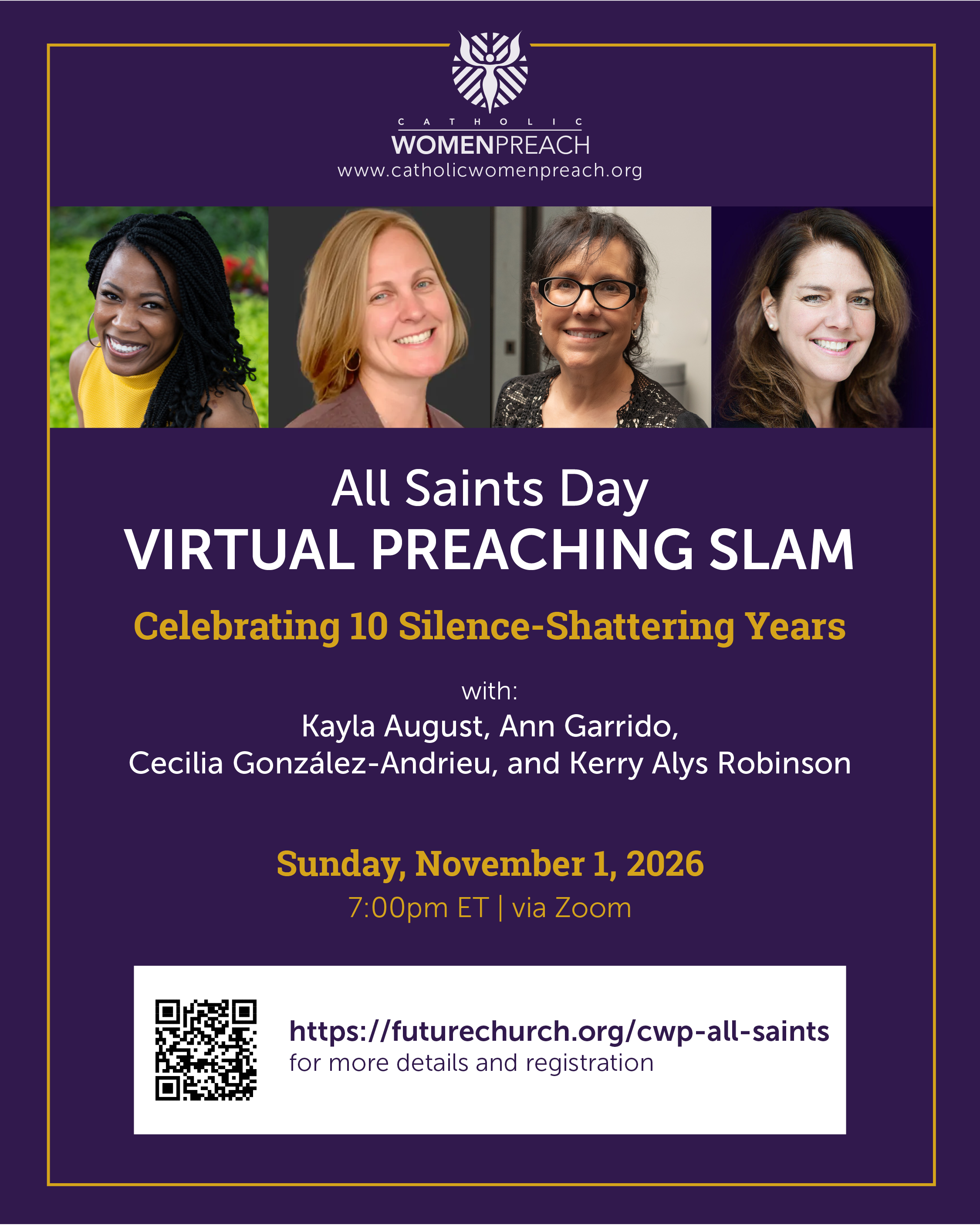
Sunday, November 1 at 7pm ET on Zoom: Join Catholic Women Preach, FutureChurch, and four extraordinary preachers as we celebrate the 10th Anniversary of Catholic Women Preach the best way we know how - by preaching!
We'll gather for a beautiful Liturgy of the Word with Kayla August, Ann Garrido, Cecilia González-Andrieu, and Kerry Alys Robinson who will break open the texts and uplift a woman saint of their choosing.
Ten years of raising voices and renewing the Church. Ten years of preaching that widens the table. Ten years of shattering the silence. Come celebrate with us!
Advertise with Catholic Women Preach: email Russ at russ@futurechurch.org
