

Ximena
Ximena
DeBroeck, Ph.D.
DeBroeck, Ph.D.
A light to the world! Those words really resonate in my heart. You know, growing up I did not like darkness; I imagine most kids don’t like it. I would flip every switch around the house and have every light on, and my parents would remind me to only use light in the spaces that I needed. But here is the thing, I just wanted light all around me. I still do, and I have also learned more about light and about darkness. Here we are, early February, the days are still short, which means there is more periods of darkness around us.
Although I still prefer light, I also have come to appreciate that not all darkness is bad or should be something to avoid; in fact, darkness can be beautiful and even peaceful. Actually, without the darkness of the night sky, we would not appreciate the light of a new day. Abram could not have counted the stars if the sky wasn’t dark. So…what is the darkness that should disquiet us? I suggest that it is the darkness of injustice, injustice against God when we engage in empty rituals and think that we can buy the divine love or when we eclipse God from our lives, and also injustice against our neighbor. Now identifying all the ways in which we treat others unjustly would require a longer time than I have to offer this reflection today….but I imagine you have a very good idea what injustice towards other looks like.
It is the darkness of injustice, of sin, of not listening to God’s voice that needs light. And today’s readings guide our attention precisely to that light!
Directing his message to the worn-out people who are returning from their exiles, having had lost their land and their Temple, Isaiah names the darkness of that time as hunger, homelessness, nakedness of poverty, and tells his listeners that their light will shine when their actions are directed to the darkness around them. Let that sit for a minute. Despite the great scientific and technological advances, our time is really not that different from Isaiah’s time; the darkness of hunger, homelessness, poverty, war, is still around. Can we respond to the prophetic call to go to those dark places and bring comfort? If so, then we will be the just person that the psalmist identifies as a light in the darkness.
Centuries after Isaiah, Jesus teaches the same message to his followers and to the crowd who might not have been sure about following him, but nevertheless came to listen to him, perhaps out of curiosity, perhaps because someone invited them. In this beautiful section of the Sermon on the Mount, Matthew presents Jesus as the new Moses, the new prophet who brings a message from God, and the message brings a clear statement of who and what his listeners are. He does not ask them, he reminds that they are the light of the world, a light that can’t be hidden, a light that shines before others, a light that dispels the darkness of injustice.
Our call to be light is not a call to be an artificial light that can cause light pollution in the night sky, that clutters the magnificent darkness of nighttime. No, our call is to be prophets bearing a light that can transform the darkness of injustice. I wonder what darkness is around you at the moment, where you can shine God’s light? I wonder what obstacles you might be facing that prevent you from shining the light? I wonder what you need to be a prophet of light and flip every switch of mercy-filled actions so that those around you don’t have to fear the darkness of injustice. Go, then, be that prophetic light to the world!
¡La luz para el mundo! Esas palabras resuenan en mi corazón. Cuando era pequeña no me gustaba la oscuridad; imagino que a la mayoría de los niñas y niños no les gusta. Prendía todas las luces, y mis padres me recordaban que solamente usara la luz en los espacios que necesitaba. Pero, ¿saben qué?, la verdad es que yo quería luz a todo mi alrededor. Todavía me gustan las luces prendidas, y también he aprendido más sobre la luz y sobre la oscuridad. Aquí estamos, pues, a principios de febrero, los días siguen siendo cortos, lo que significa que hay más periodos de oscuridad.
Aunque sigo prefiriendo la luz, también he llegado a comprender que no toda la oscuridad es mala ni debería evitarse; de hecho, la oscuridad puede ser hermosa e incluso darnos paz. En realidad, sin la oscuridad del cielo nocturno, no apreciaríamos la luz de un nuevo día. Abram no podría haber contado las estrellas si el cielo no hubiera estado oscuro. Entonces… ¿cuál es la oscuridad que debería inquietarnos? Sugiero que es la oscuridad de la injusticia, la injusticia contra Dios cuando nos dedicamos a rituales vacíos y creemos que podemos comprar el amor divino o cuando desplazamos a Dios de nuestras vidas, como en un eclipse, y también la oscuridad es injusticia contra nuestro prójimo. Ahora bien, identificar todas las maneras en que tratamos a los demás injustamente requeriría más tiempo del que tengo hoy para ofrecer esta reflexión... pero supongo que tienen una muy buena idea de cómo se manifiesta la injusticia contra los demás.
Es la oscuridad de la injusticia, del pecado, de no escuchar la voz de Dios, lo que necesita luz. Y las lecturas de hoy dirigen nuestra atención precisamente a esa luz. Dedicando su mensaje al pueblo agotado que regresa del exilio, tras haber perdido su tierra y su Templo, Isaías identifica la oscuridad de aquel tiempo como el hambre, la falta de techo, la desnudez de la pobreza, y les dice a sus oyentes que su luz brillará cuando sus acciones se dirijan a la oscuridad que los rodea. Pausemos un momento para que esto nos penetre en el corazón.
A pesar de los grandes avances científicos y tecnológicos, nuestro realidad actual no es tan diferente de la de Isaías; la oscuridad del hambre, la falta de techo, la pobreza y la guerra aún persisten. ¿Podemos responder al llamado profético de ir a esos lugares oscuros y brindar consuelo? Si es así, seremos la persona justa que el salmo identifica como una luz en la oscuridad.
Siglos después de Isaías, Jesús enseña el mismo mensaje a sus discipulos y a la multitud que, aunque no estaba segura que querian seguirlo, acudió a escucharlo, quizá por curiosidad, quizá porque alguien les invitó. En esta hermosa sección del Sermón del Monte, Mateo presenta a Jesús como el nuevo Moisés, el nuevo profeta que trae un mensaje de Dios, y este mensaje deja claro quiénes y qué son sus oyentes. Miren que no les pregunta, sino que les recuerda que son la luz del mundo, una luz que no se puede ocultar, una luz que brilla ante los demás, una luz que disipa la oscuridad de la injusticia.
Nuestro llamado a ser luz no es un llamado a ser una luz artificial que pueda causar contaminación lumínica en el cielo nocturno, que opaque la magnífica oscuridad de la noche. No, nuestro llamado es a ser profetas portadores de una luz que pueda transformar la oscuridad de la injusticia. Me pregunto qué oscuridad te rodea en este momento, donde puedas irradiar la luz de Dios. Me pregunto también qué obstáculos estaras enfrentando que te impiden irradiar la luz. Y me pregunto qué necesitas para ser un profeta de luz y prender todas las luces de acciones llenas de misericordia para que quienes te rodean no tengan que temer la oscuridad de la injusticia. ¡Ve, entonces, sé esa luz profética para el mundo!
Ximena DeBroeck, Ph.D.
Ximena DeBroeck, Ph.D.
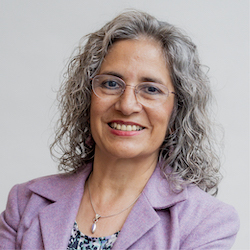
Ximena DeBroeck is an adjunct professor of Scripture and Theology at the Institute for Pastoral Studies of Loyola University, Chicago, Mount St. Mary’s Seminary, Emmitsburg, and Divine Mercy University. Previously she served the Church in various roles including former Director of Pastoral Formation and full-time faculty at Mount St. Mary’s Seminary, Emmitsburg, MD, Assistant Professor of Sacred Scripture at St. Mary’s Seminary, Director of Catechetical and Pastoral Formation at the Archdiocese of Baltimore. Above all, she is a student of God’s Word, learning to receive it and welcoming the transformation it brings.
Dr. DeBroeck’s publications include Forming the Hearts of Prophets for the Kingdom, an essay on Lectio Divina in Seminary Formation, various articles on Scripture interpretation and sacramental formation, numerous essays in the devotional Give Us This Day, and the Study Guide for Sherry Weddell’s book Forming Intentional Disciples. Additionally, she co-authored Manual para proclamadores de la Palabra for 2023 and 2022 (Workbook for Lectors, Gospel Readers, and Proclaimers of the Word). She presented a doctoral seminar on “Ritual and Remembrance” at the University of St. Andrews, Scotland and has been an invited speaker at various events.
Ximena grew up in Ecuador and is fluent in English and Spanish. She earned a Theology MA, with Scripture concentration, from Saint Vincent Seminary, a License in Sacred Theology-Biblical Studies from St. Mary’s Seminary, a doctorate in Systematic Theology from Duquesne University, and a MS in Psychology from Divine Mercy University. In the theology field, her research has focused on sacrifice as a path to understanding the call to be self-gift. In the psychology field, her research explores self-concept and self-gift in relation to trauma, attachment patterns, memory, and vocational flourishing.

October 17 at 7pm ET: Join Catholic Women Preach, FutureChurch, contributors to the Year C book, and co-editors Elizabeth Donnelly and Russ Petrus as we celebrate the release of the third and final volume of this ground-breaking, award winning series.
"Catholic Women Preach is one of the more inspiring collection of homilies available today. Based on the deep spirituality and insights of the various women authors, the homilies are solidly based on the scriptures and offer refreshing and engaging insights for homilists and listeners. The feminine perspective has long been absent in the preached word, and its inclusion in this work offers a long overdue and pastorally necessary resource for the liturgical life of the Church." - Catholic Media Association
Advertise with Catholic Women Preach: email Russ at russ@futurechurch.org
