

Betsy
Betsy
Cahill
Cahill
Every summer when my children were young, we embarked on the long drive down the East Coast to visit family. An essential part of my preparations (in addition to laying in quantities of Pepperidge Farm Goldfish and plenty of library DVDs for the tedious stretches of I-95) was to pick up the TripTik from the local Triple-A office.
For those of you unfamiliar with this artifact, the Triptik was a spiral-bound booklet of strip maps, sized to fit in the glove compartment, that was personalized for one’s journey. The recommended route was marked with an orange highlighter, and each page had turn-by-turn directions; the reverse side listed hotels and restaurants, rest stops, and construction zones along the way. It was the forerunner of today’s GPS technologies, a sort of Google Maps for the Age of Analog.
The TripTik wasn’t perfect: it could not alert us to traffic accidents or emergency road closures. But it was a helpful guide, as far as it went.
In today’s Gospel reading, the Torah, that extensive body of legal and ethical instruction provided to the ancient Israelites in the Old Testament, functions a bit like the Triptik: useful as far as it goes, but no longer sufficient. For in these Gospel verses, Jesus not only updates our road map but re-orients our entire journey.
In the Jewish tradition, the Torah was the path to righteousness. Now in our time, righteousness is often conflated with the self-righteousness that seems to flourish on social media and elsewhere in our culture. But in ancient Israel, and in Jesus’ day, it meant simply to be right with God. The righteous person was the one who obeyed the Divine One’s commandments – not only the starting lineup of the Ten, but the whole sweeping body of 613 laws that comprise the Old Testament legal code.
Our first reading from Sirach, and the verses from Psalm 119, recite the party line of ancient Judaism: the righteous, and the blessed, are those who walk in the law of God, who diligently keep God’s decrees, who steadfastly observe God’s statutes. The psalm verses are especially stringent, deploying the Hebrew verb shamar, meaning “keep” or “guard,” no fewer than four times in these eight verses. This is the party line that Jesus means to interrupt, as he makes audacious claims that reshape the very meaning of righteousness.
Speaking as he was to the scribes and Pharisees – those bureaucrats and experts on Jewish life who argued for meticulous adherence to the Law – Jesus pays due deference to the legal framework of the Torah. He insists that his aim is not to overturn tradition, but to remake it. He proclaims respect for the ancient commandments, right down to the last jot and tittle (or in Greek, the last iota and keraia). But in emphasizing the primacy of a righteousness that “exceeds that of the scribes and Pharisees,” he opens the door to redefining that very concept.
In the “real world” where human nature prevails, Jesus acknowledges that people will inevitably harm and betray and lie to one another. So in the context of human weakness, the laws retain some practical purpose (just like my TripTik). They are necessary, but not sufficient.
Murder, adultery, divorce, the swearing of oaths – in this Gospel passage, Christ takes each of these human sins and failures in turn, and uses them to proffer a new understanding of righteousness by contrasting the old ways with the new way. “You have heard that it was said,” he declares again and again, “but I say to you. . .”
And what Christ says, in a nutshell, is that the laws are useful as far as they go, but are not enough for those who wish to bring about and live in the reign of God.
Jesus takes us deeper into the meaning of the law, beneath exterior compliance to interior motivation.
For in the reign of the Holy One, to be righteous will no longer be a matter of simply obeying the laws concerning divorce, or oath-taking, or adultery. To be righteous will be to show ourselves responsive to the divine call, orienting ourselves around the body of Christ, not the body of law. We must go beyond the outward observance of the jots and tittles to the underlying thoughts and attitudes that give rise to them. Jesus transports us past the surface of specific rules to the guiding principles behind them, beyond visible metrics of obedience to deeper considerations of motive and attitude.
Let’s take but one example, murder. Who among us has not “killed” someone’s spirit or destroyed their confidence, with a sharp word or a critical judgment? In dramatically equating an act of physical violence with contemptuous thoughts and angry words, Jesus seizes our attention and turns our gaze inward to our own culpability.
In the reign of God, true righteousness transcends outward practice and demands of us a radical interior openness to knowing and doing God’s will. Jesus calls us unflinchingly to embark on an open-ended journey towards holiness. Do not follow the law mindlessly and meticulously, he proclaims: follow me.
As we prepare to begin the somber, contemplative season of Lent this week, we would do well to focus our penitential self-reflection on whether we are truly abiding by the Law of Love, which means truly abiding in Christ, who is now, as always, the Way, the Truth, and the Life.
Betsy Cahill
Betsy Cahill
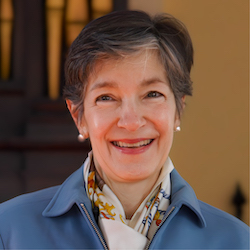
Betsy Cahill is a wife and mother, a writer, and civic volunteer with deep experience in biblical studies, historic preservation, and secondary education. Co-author (with Joseph Papp) of Shakespeare Alive! (Bantam Books, 1988), she also contributed a chapter to Empty Churches (Oxford University Press, 2018) and has written for both Commonweal and America magazines for many years. Early in her career, before stepping away to raise four children, she worked at the Public Theater and then the New York Public Library, where she was director of public affairs. Having earned degrees in Classics (Harvard) and English Literature (Oxford), in 2010 she achieved a long-time dream when she graduated from Yale Divinity School with an M.A. in Hebrew Bible. Using her knowledge of biblical languages, she has taught classes and lectured on spirituality and Scripture. For the past fourteen years she has sent out “Keeping Advent” and “Songs for Lent,” a series of a daily reflections (free by subscription) during the two penitential seasons of the church year. She has served on numerous non-profit and independent school boards. After 30 years away from her hometown of Charleston, South Carolina, Betsy returned there with her family in 2010. Recognizing the power of place to nurture community, safeguard identity, and expand opportunity, she chaired the Board of the Preservation Society of Charleston for 8 years and currently serves as Vice Chair of the National Trust for Historic Preservation. This spring she will complete training as a Spiritual Director through Fordham University. As a board member of Cristo Rey Charleston, she is deeply engaged in starting the newest school in this nationwide network of innovative high schools for students of limited economic resources, but unlimited dreams.

October 17 at 7pm ET: Join Catholic Women Preach, FutureChurch, contributors to the Year C book, and co-editors Elizabeth Donnelly and Russ Petrus as we celebrate the release of the third and final volume of this ground-breaking, award winning series.
"Catholic Women Preach is one of the more inspiring collection of homilies available today. Based on the deep spirituality and insights of the various women authors, the homilies are solidly based on the scriptures and offer refreshing and engaging insights for homilists and listeners. The feminine perspective has long been absent in the preached word, and its inclusion in this work offers a long overdue and pastorally necessary resource for the liturgical life of the Church." - Catholic Media Association
Advertise with Catholic Women Preach: email Russ at russ@futurechurch.org
