

Sister Xiomara
Sister Xiomara
Méndez Hernández, OP, BCC
Méndez Hernández, OP, BCC
The Well – Profound Encuentro
For millennia, Wells have provided water for communities, travelers, and animals. A sign of prosperity and abundance in the biblical narrative. Wells have also proven to be significant meeting grounds, giving relief to emotionally and spiritually thirsting people.
In Genesis, the angel of God discovers Hagar, Sarai’s runaway slave, by a Well in the desert. While ordering Hagar to return to her mistress, God simultaneously promises to multiply her descendants. Hagar recognizes that God has not abandoned her but singled her out for blessing. Trusting this merciful promise she calls God El Roi “the living One who sees me.” The one who understands and meets her (Gen. 16:13-14).
In the Gospel, we hear about another sacred and profound encounter by a Well, between a Samaritan Woman and Jesus. - This Encuentro echoes famous biblical stories of encounters between men and women at the Well: Abraham’s servant seeking a bride for Isaac encounters Rebekah, (Gen. 24:10-21); Jacob meets Rachel (Gen. 29:1-12); and Moses meets Zipporah (Exod. 2:15-210).
In the Gospel, like in the Old Testament, a Well once again serves as a place of meeting and rescue. In the heat of the noonday sun, feeling tired from the journey, Jesus sits by a well in Sychar and encounters a Samaritan woman who has come to fetch some water. During the conversation, Jesus points to himself as the source of living water and draws out the spiritual thirst of a woman with a history of unsuccessful relationships.
As we reflect on the deep encounter between Jesus and the Samaritan woman, we hear an invitation to enter a mutual boldness. It seems to me the encounter of Jesus and the Samaritan woman is a radically challenging one, especially since this woman was from an unacceptable race for the Jews. It would be like an Immigration Enforcement agent having a kind and caring conversation with an immigrant today.
Yet, both Jesus and the Samaritan woman take the leap of faith to engage in a transformational dialogue. Each in their own way calls the other to a greater depth along with self-disclosure as to who they are and what they have been called to do. Neither one is the same after this amazing heart-to-heart exchange. The Well becomes the sole witness of this sacred story.
When I step back- into the scene with Jesus and the Samaritan woman, I am awed by how they both meet each other where they are at, at that moment in time. There was an openness and willingness to listen and to deepen their relationship with one another, despite their different ethnic backgrounds. This way of relating with each other can be freeing and challenging at times.
“How can I/we meet each other in community - where we are at - without making assumptions about the other?” The dialogue between Jesus and the Samaritan woman shows us that through honest and open dialogue we can be flexible in allowing change to happen.
The Samaritan woman is a key figure in the story of salvation, even though she remains unnamed. She models both ideal disciple and ideal apostle. She lets herself be led by her personal encounter with Jesus into faith in the Christ, the Messiah, the I AM. Filled with the joy of the one who received the Living Water, she immediately turns to share her new faith with others. This woman is a model for preachers, catechumens, and all of us on the Lenten journey.
Jesus’ statement, “Give me a Drink - Dame de Beber,” invites us to pause during our Lent to first listen. We can begin by just showing up at our personal and spiritual Well to encounter Christ, and perhaps others different than us.
Once there, we might ask, like the Samaritan woman, “How can you ask me for a drink? And get ready because this encounter could reveal our innermost being. We might even ask: Who am I that you ask me for a drink?
Indeed, we can be transformed by an encounter at the Well. We might risk receiving Living Water. It could also happen that by being gifted with Living Water, we become that gift.
All of this can happen because a woman came to a Well, risked engaging in a dialogue with a stranger and had a profound encounter. Maybe we encounter Jesus in the other person who is unlike us as the Samaritan woman is unlike Jesus.
May this Lent you find a Well where you can come to gather to have an Encuentro with the Living One Who Sees us, the Messiah, the I AM who quenches our thirst in surprising ways.
Un Encuentro Profundo
Durante milenios, los pozos han proporcionado agua a comunidades, viajeros, y animales. Siendo signos de prosperidad y abundancia en la narrativa bíblica. Los pozos también han demostrado ser importantes lugares de encuentro, dando alivio a personas sedientas emocional y espiritualmente.
En Génesis, el ángel de Dios descubre a Agar, la esclava fugitiva de Sarai, junto a un pozo en el desierto. Mientras ordena a Agar que regrese con su señora, Dios le promete al mismo tiempo multiplicar su descendencia. Agar reconoce que Dios no la ha abandonado, sino que la ha elegido para bendecirla. Confiando en esta misericordiosa promesa, ella llama a Dios El Roi, «el que me ve», el que la comprende y la encuentra (Génesis 16:13-14).
En el Evangelio, escuchamos otra historia de un encuentro sagrado y profundo junto a un pozo, entre una mujer samaritana y Jesús. Este Encuentro se hace eco de famosas historias bíblicas de encuentros entre hombres y mujeres junto al pozo. Por ejemplo: el siervo de Abraham en busca de una esposa para Isaac se encuentra con Rebeca (Génesis 24:10-21); Jacob se encuentra con Raquel (Génesis 29:1-12); y Moisés- se encuentra con Séfora (Éxodo 2:15-210). Todos estos encuentros alrededor de un pozo.
En el Evangelio, al igual que en el Antiguo Testamento, un pozo vuelve a servir como lugar de encuentro y rescate. Bajo el calor del sol del mediodía, cansado del viaje, Jesús se sienta junto a un pozo en Sicar y se encuentra con una mujer samaritana que ha venido a buscar agua.
Durante la conversación, Jesús se señala a sí mismo como la fuente del Agua Viva y sacia la sed espiritual de una mujer con un historial de relaciones frustradas.
Al reflexionar sobre el profundo encuentro entre Jesús y la mujer samaritana, escuchamos una invitación a entrar en un riesgo mutua. Me parece que este encuentro es radicalmente desafiante, sobre todo porque esta mujer era de una raza inaceptable para los judíos. Sería como si un agente de inmigración tuviera hoy una conversación amable y gentil con una persona inmigrante.
Sin embargo, tanto Jesús como la mujer dan un salto de fe para entablar un diálogo transformador. Cada uno a su manera llama a la otra persona a una mayor profundidad, junto con la revelación de quiénes son y a qué han sido llamados.
Ninguno de los dos es el mismo -la misma- después de este asombroso intercambio de corazón a corazón. El pozo se convierte en el único testigo de esta historia sagrada.
Cuando vuelvo a la escena con Jesús y la mujer samaritana, me sorprende mucho cómo ambos se encuentran desde su propia realidad en ese momento. En ambos había una apertura y una voluntad de escuchar y de profundizar en su dialogo, a pesar de sus diferencias étnicas. En verdad, esta manera de encontrarse puede ser liberadora y retadora a la vez.
La mujer samaritana es una figura clave en la historia de la salvación, aunque no se mencione su nombre. Ella es un modelo tanto de discípula ideal como de apóstol ideal. Ella se deja llevar por su encuentro personal con Jesús hacia la fe en Cristo, el Mesías, el YO SOY.
Llena del gozo de quien ha recibido el Agua Viva, se vuelve inmediatamente para compartir su nueva fe con las demás personas de su pueblo. Esta mujer es un modelo para quienes predican, los catecúmenos y todos y todas quienes estamos en el camino de la Cuaresma.
La afirmación de Jesús, «Dame de beber», nos invita a hacer una pausa durante la Cuaresma para escuchar primero. Podemos empezar simplemente acudiendo a nuestro pozo personal y espiritual para encontrarnos con Cristo y, tal vez, con otras personas diferentes a nosotras.
Una vez allí, podríamos preguntarnos, como la mujer samaritana: «¿Cómo puedes pedirme de beber?». Y preparémonos, porque este encuentro podría revelar nuestro SER más íntimo. Incluso podríamos preguntarnos: «¿Quién soy yo para que me pidas de beber?».
De hecho, un encuentro en el pozo podría transformarnos. Si nos arriesgarnos hasta podríamos recibir Agua Viva. También podría suceder que, al recibir el don del Agua Viva, nos convirtamos en ese don.
Todo esto sucedió porque una mujer fue a un pozo, se arriesgó a entablar un diálogo con un desconocido y el resultado fue un encuentro profundo. Quizás encontremos a Jesús en la persona que es diferente a nosotros, así como la mujer samaritana era tan diferente a Jesús.
Que en esta Cuaresma encontremos ese pozo donde podamos ir para reunirnos, para tener un Encuentro con El que VIVE QUE VE, el MESÍAS, el YO SOY que sacia nuestra sed de maneras sorprendentes.
Sister Xiomara Méndez Hernández, OP, BCC
Sister Xiomara Méndez Hernández, OP, BCC
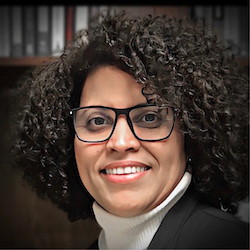
Sister Xiomara (See-o-mara), an Adrian Dominican Sister and is the Executive Director of Dominican Sisters Conference – DSC. Previously, she ministered for 11 years as a Hospital Chaplain, more recently at Holy Cross Hospital in Fort Lauderdale, FL where she was the Spiritual Care Manager. She has had diverse ministerial experiences in the areas of preaching, catechesis, directing retreats, Spanish-English Medical interpreting, liturgical dancing, and a high fashion teacher. She has a great passion for creating ambiances and rituals to foster deep prayerful experiences. Sister Xiomara holds a Master’s Degree in Pastoral Studies from Catholic Theological Union – CTU in Chicago and is a Board Certified Chaplain with the National Association of Catholic Chaplains – NACC. For more than 20 years, she has had the opportunity to preach in both Spanish and English. Before she became a religious sister, she was a fashion designer in her native country, the Dominican Republic. She currently lives in Miami, Florida.
En español
La Hermana Xiomara, es una religiosa Dominica de Adrian, nacida en la República Dominicana. Actualmente es Directora Ejecutiva de la Conferencia de Hermanas Dominicas en los Estados Unidos de Norteamerica– DSC. Anteriormente, ejerció su ministerio durante 10 años como Capellana de Hospital en el Sistema de Salud de la Universidad de Loyola en el área de Chicago; los Hospitales St. Rose Dominican en Henderson y Las Vegas, Nevada; y más recientemente en el Hospital Holy Cross in Fort Lauderdale, FL, donde fue la Gerente del Departamento de Cuidado Espiritual. Ha tenido diversas experiencias ministeriales en las áreas de predicación, catequesis, dirección de retiros, interpretación médica español-inglés, danza litúrgica, y profesora de alta costura. Ha interpretado la vida de Santa Rosa de Lima en varias Conferencias de Predicación Dominica en los Estados Unidos de Norteamerica. También ha dado presentaciones sobre la vida de San Martín de Porres, contemporáneo de Rosa. La Hermana Xiomara tiene una Maestría en Estudios Pastorales de la Universidad Unión Teológica Católica - CTU en Chicago y es Capellana Certificada por la Asociación Nacional de Capellanes Católicos - NACC. Por más de 20 ańos ella a tenido la gracia de predicar en Español e ingles. Antes de convertirse en hermana religiosa, era diseñadora de moda en su país natal. Le encanta cocinar, caminar, y bailar. Actualmente vive en Miami, Florida.

October 17 at 7pm ET: Join Catholic Women Preach, FutureChurch, contributors to the Year C book, and co-editors Elizabeth Donnelly and Russ Petrus as we celebrate the release of the third and final volume of this ground-breaking, award winning series.
"Catholic Women Preach is one of the more inspiring collection of homilies available today. Based on the deep spirituality and insights of the various women authors, the homilies are solidly based on the scriptures and offer refreshing and engaging insights for homilists and listeners. The feminine perspective has long been absent in the preached word, and its inclusion in this work offers a long overdue and pastorally necessary resource for the liturgical life of the Church." - Catholic Media Association
Advertise with Catholic Women Preach: email Russ at russ@futurechurch.org
