

Sr. Maureen
Sr. Maureen
Sullivan, OP
Sullivan, OP
INTRODUCTION
Welcome…
The Second Vatican Council took the reform of the liturgy very seriously and rightly so. Over the years we had lost touch with the original meaning of the sacraments…and for our purposes today, especially baptism, which had become “considered little more than a way to save infants from original sin.”
(Rita Ferrone, Commonweal, April 12, 2023.)
This focus on baptism reminded me of my niece’s baptism. During the Mass, my sister began to disrobe little Lauren and proceeded to carry her up to the baptismal font. There she was dipped three times in the water, after which the priest raised Lauren up for the community to welcome its newest member.
To my surprise, those in the pews began to clap and the choir began to sing the most beautiful chorus of Alleluias I had ever heard.
As in the New Testament, Lauren’s baptism was a communal celebration.
THE FEAST OF THE BAPTISM OF JESUS BY JOHN THE BAPTIST
Today is the feast of Jesus’ baptism by John the Baptist. The readings are from Isaiah, Acts of the Apostles, and Matthew’s gospel.
Like many of you, I grew up in two churches…the one before Vatican II and the one after.
My earliest introduction to the faith was before the Council, when we were still reading the bible literally.
Growing up, I remember thinking: “Why did Jesus have to get baptized?” After all, he was God.
There are reasons for his baptism, but they would have been too challenging for a young mind.
Before examining those reasons, let me say that through Catholic Women Preach, the many wonderful women preachers before me have shown that theology is never merely intellectual, but always shapes our spiritual lives and ministry.
Each of us is called to be a missionary disciple. To be baptized in Jesus Christ is a promise to live as Jesus did.
THE BAPTISM OF JESUS: Matthew 3:13-17
So…why WAS Jesus baptized? Biblical scholars offer several theological responses.
It marked the beginning of his public ministry and revealed him as the long-awaited Messiah.
It identified him with humanity, with our wounded and broken nature.
But Jesus was not baptized for his sins, he was baptized for ours.
Jesus’ baptism goes to the heart of his mission…saving humanity through his death and resurrection
Finally, three signs occur in this reading:
-Heaven opens
-The Spirit descends and anoints Jesus
-A voice is heard: “This is my beloved Son, in whom I am well pleased”
This is one of the few Trinitarian passages in the bible.
ISAIAH 42: 1-4. 6-7
Today’s first reading from Isaiah reads like a prequel to today’s gospel. The author speaks of a chosen servant who will be the deliverer of all good things for the people.
The servant is described as gentle, a bringer of hope and justice…told he has been chosen to be a covenant to the people and a light to the nations.
This figure is ultimately identified as Jesus Christ in Matthew’s account of Jesus’ baptism.
ACTS OF THE APOSTLES 10: 34-38
The second reading is from Chapter 10 in Acts of the Apostles. It is considered a groundbreaking chapter for the church’s teaching on who can be saved.
Up until this point in the early church, Jesus’ teaching about the Kingdom of God was viewed as reserved for the Jews who had accepted Jesus.
But Chapter 10 acknowledges the legitimate inclusion of the Gentiles, non-Jews, which was a major shift in who can be saved.
Through the inspiration of the Holy Spirit, Acts held that the offer of salvation through Jesus Christ is universal.
But somewhere over the years, this changed.
Due to its literal reading of scripture, the church began to teach that outside the Roman Catholic Church, there can be no salvation.
"There is no salvation outside the church." - St. Augustine
As we see in this slide from St. Augustine, sometime around the 5th century, this became official Church teaching and remained as such until Vatican II.
The Council retrieved the early church’s position that God’s offer of salvation is universal and is never rescinded.
In Chapter 10, St. Peter establishes the significance of this chapter for the church. He tells the group: “In truth, I see that God shows no partiality. Rather, in every nation…whoever fears him and acts uprightly is acceptable to God” (Acts 34-35).
The footnote for that verse is important. It reads: “The revelation of God’s choice of Israel to be the people of God did not mean that he withheld his divine favor from other people.”
For those of us whose early religious education taught them that only Roman Catholics can be saved…this passage from Acts is truly incredible.
SOME CLOSING THOUGHTS
The descent of the Holy Spirit at Jesus’ baptism empowered him and anointed him for his public ministry.
We too were empowered to be missionary disciples to others.
Each of us received the gift of the indwelling of the Holy Spirit.
God became a human being so that we would not seek him in the hereafter but in the face of our neighbor.
When others see us, do they see God?
Most of us cannot remember our own baptism. Our Godparents said “yes” on our behalf.
But at some point in our lives, we had to say our own “Yes.”
By virtue of your attendance here today, I gather that most of you have already said “yes,” which was the beginning of your journey as a missionary disciple.
It is a challenging journey, but you are not alone.
CONCLUSION: ISAIAH 41: 10
As God tells us in Isaiah:
I am He
I am He who will sustain you.
I have made you and
I will carry you;
I will sustain you and
I will rescue you.
Sr. Maureen Sullivan, OP
Sr. Maureen Sullivan, OP
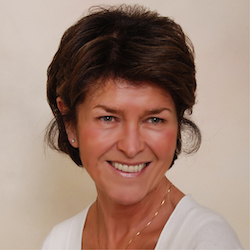
Sr. Maureen Sullivan, a Dominican Sister of Hope from New York, received her M.A. in Theology from Manhattan College in the Bronx and her Ph.D. from Fordham University. She is Professor Emerita of Theology at St. Anselm College, New Hampshire. Sr. Maureen has written two books on the Second Vatican Council, both published by Paulist Press: 101 Questions and Answers on Vatican II, 2002 and The Road to Vatican II: Key Changes in Theology, 2007.

October 17 at 7pm ET: Join Catholic Women Preach, FutureChurch, contributors to the Year C book, and co-editors Elizabeth Donnelly and Russ Petrus as we celebrate the release of the third and final volume of this ground-breaking, award winning series.
"Catholic Women Preach is one of the more inspiring collection of homilies available today. Based on the deep spirituality and insights of the various women authors, the homilies are solidly based on the scriptures and offer refreshing and engaging insights for homilists and listeners. The feminine perspective has long been absent in the preached word, and its inclusion in this work offers a long overdue and pastorally necessary resource for the liturgical life of the Church." - Catholic Media Association
Advertise with Catholic Women Preach: email Russ at russ@futurechurch.org
